A weekly budget instead of a daily target
A daily target draws a straight line through a life that is not straight. Wednesday you eat at home, Saturday at your in-laws, and one evening out turns a good day into a failed one. That is not a physiological problem, it is an accounting one.
So Athverge can work with a weekly budget. Seven days of calories arrive as one pot, and the app shows how much has gone. Eat generously on Saturday and you know exactly what that costs on Monday. The weekly average decides your result, so that is what you steer.
The swap engine: replace a meal within a 5% margin
You do not fancy the chicken your plan calls for. In most apps that means hunting for something with roughly the same values and hoping it lands.
Here you ask for a replacement and get options that stay within 5% of both the calories and the macro split of the original. Your plan still adds up without you doing arithmetic, and without rebuilding your day.
The engine that learns your expenditure rather than estimating it
A formula estimates your energy expenditure from averages; you are not an average. The diet engine derives your real maintenance from what you logged and what you weighed: your average intake against the rate of weight change you actually achieved. That rate comes from a trend weight that accounts for the time between readings and clamps outliers: a typo of 7.8 instead of 78 kilos does not knock your advice over.
Every week you get a review with a concrete proposal and the reason attached. You decide whether to take it: it is a proposal, not a number that quietly changes. And your protein stays anchored in grams per kilo: a wider weekend lands in carbs and fat, never in less protein.
What sits underneath the calories
Micronutrients, fibre and protein per kilo of body weight are there as standard. That is the layer where most apps stop and where it starts for anyone training seriously: too little fibre explains a lot of everyday issues, and protein in grams says little without your body weight next to it.
You can tag hunger and energy per meal. After two weeks you can see which meals keep you full and which send you to the cupboard at four in the afternoon. No database has that for you.
Logging without a fight
The base is the full RIVM NEVO table: 2,328 Dutch products with up to 29 nutrient values per product. Scan a barcode and Open Food Facts fills in the rest, ranked Netherlands-first. Or type what you ate in plain language; the parser reads that on the device itself, with no AI bill attached.
Beyond that: a photo of your plate with the grams left for you to correct, a basket that carries several products through one search round, quick add, copying yesterday, and filling the calories you have left. Logging is the thing you do most often, so it has to be done inside ten seconds.
Recipes, week plan and shopping
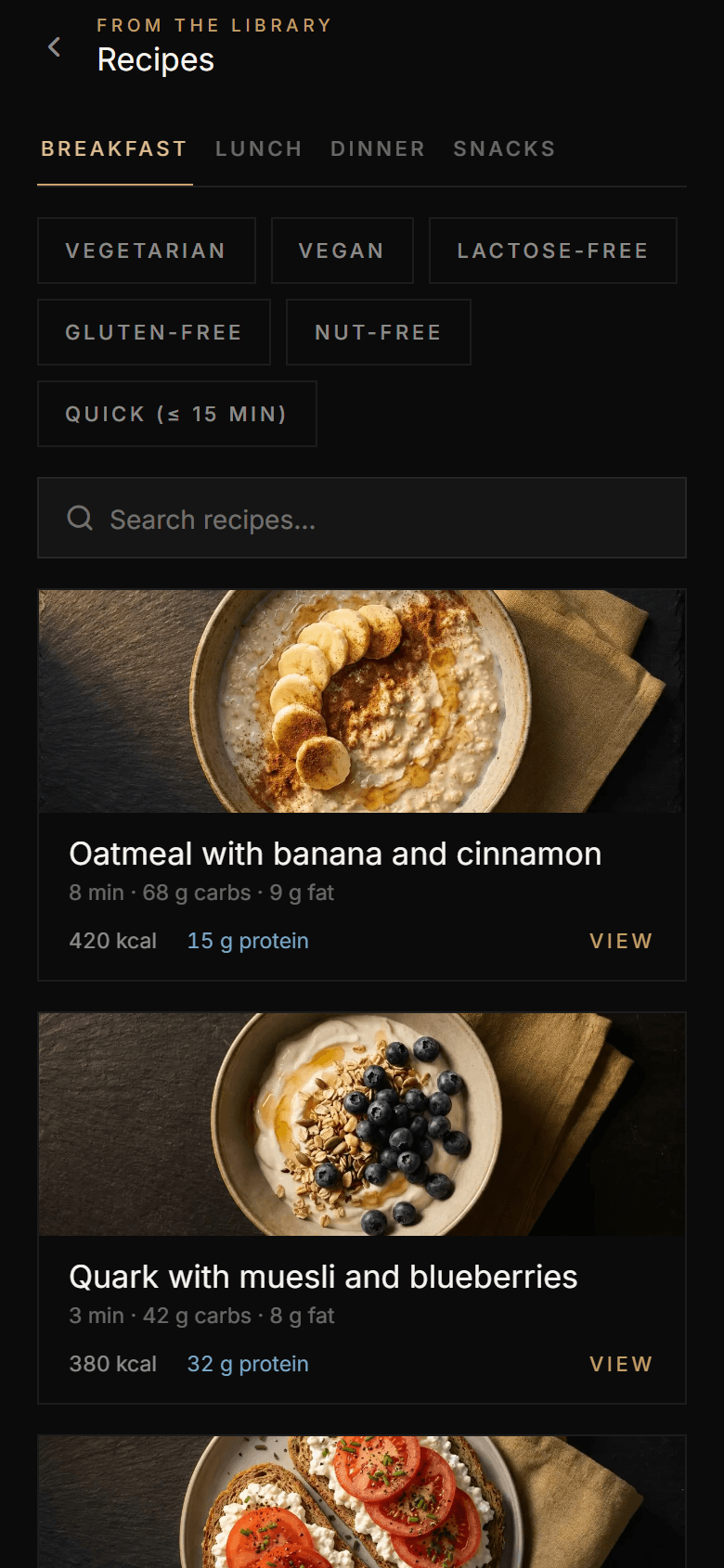
480 recipes with a seven-day week plan, a shopping list that falls out of it, and allergens per recipe. Meals scale for two to six people and on calories, so you do not have to cook separately for yourself.
Cooking something that is not in there? Import the recipe from a URL and it joins the rest.